
On Mutualistic Symbiosis, Symbiotic Partnerships and Being In Sync: Lichens


In New Zealand, we are extremely fortunate to host around 10% of the world's population of lichen species. Close to 2,000 described species with more waiting to be discovered.
These plant-like lifeforms are in fact an astonishing example of how two (or more) completely different organisms can symbiotically work together for mutual benefit. The fact that lichens can be found in almost any habitat anywhere on the planet is a testament to their success story.
Lichens are a composite organism of algae or cyanobacteria (photobionts) and fungi (mycobiont). Scientists also believe that in majority of lichens, a third partner enters this symbiosis, an order of basidiomycete yeast. It is thought that these yeast cells play an important role in the formation and the shape variation of the cortex of the thallus (the body, vegetative tissue).

The algae or cyanobacteria (photobionts) live among the filaments (hyphae) of the fungi.
The fungi benefits from the carbohydrates produced via photosynthesis by the photobionts, where the algae may provide up to 80% of their sugar production to the fungus.
In return, the filaments of the fungi provide protection from the environment, absorb water and minerals, and provide anchorage and extended surface area for photosynthesis.
They reproduce sexually , like other fungi, producing spores which then need to meet with a compatible algal partner to form a lichen, or asexually where a piece of lichen would break off, new lichen can grow from that fragment.

Lichens are pioneer, keystone species, often among the first ones to settle in places lacking soil. They play an important yet often overlooked role in all ecosystems. These living organisms are not parasites; instead, they absorb all the nutrients and sunlight straight from the atmosphere, using their host only as a substrate surface for anchorage. Many lichens are sensitive to environmental disturbances and can be used to asses air pollution.
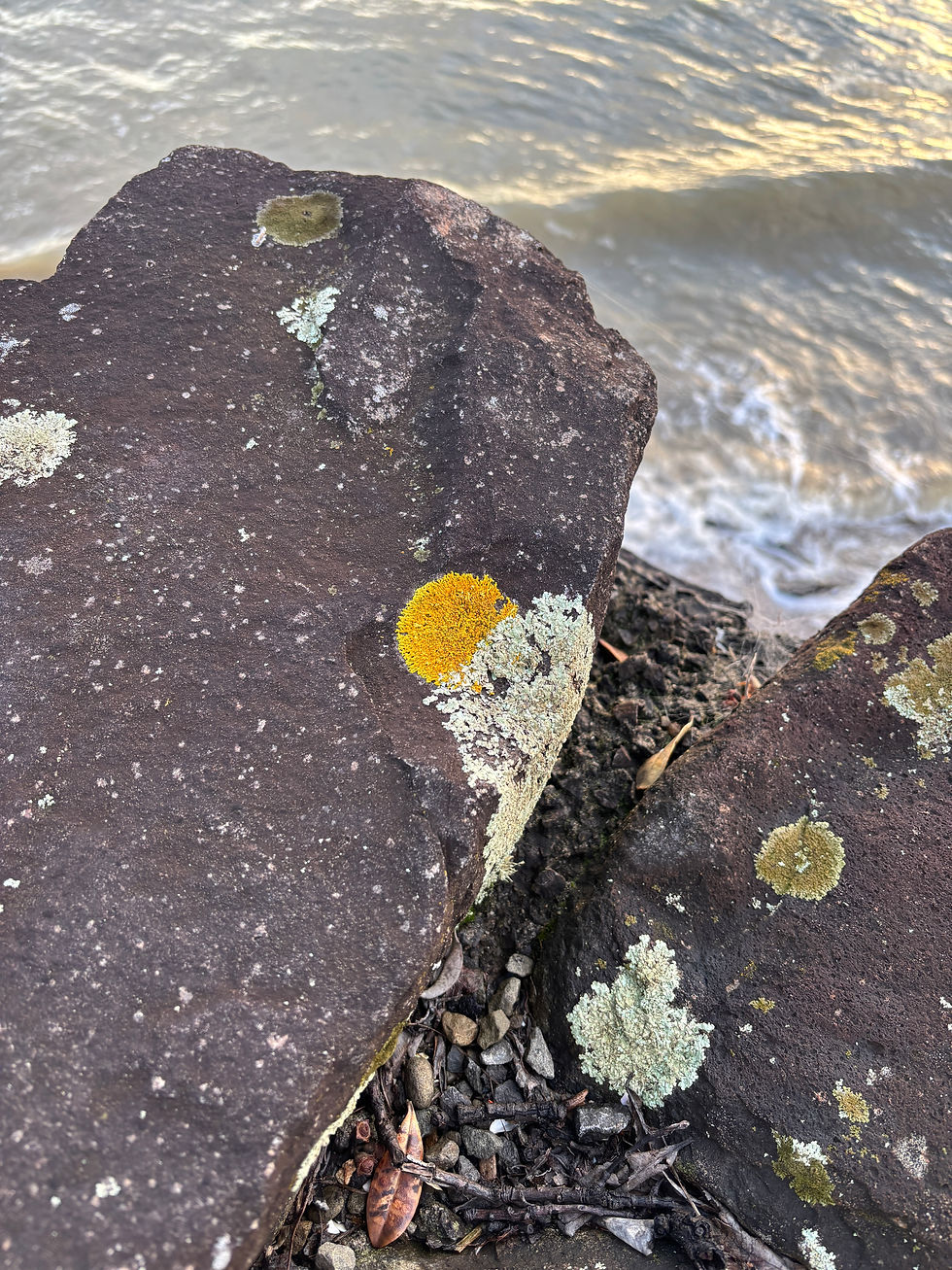
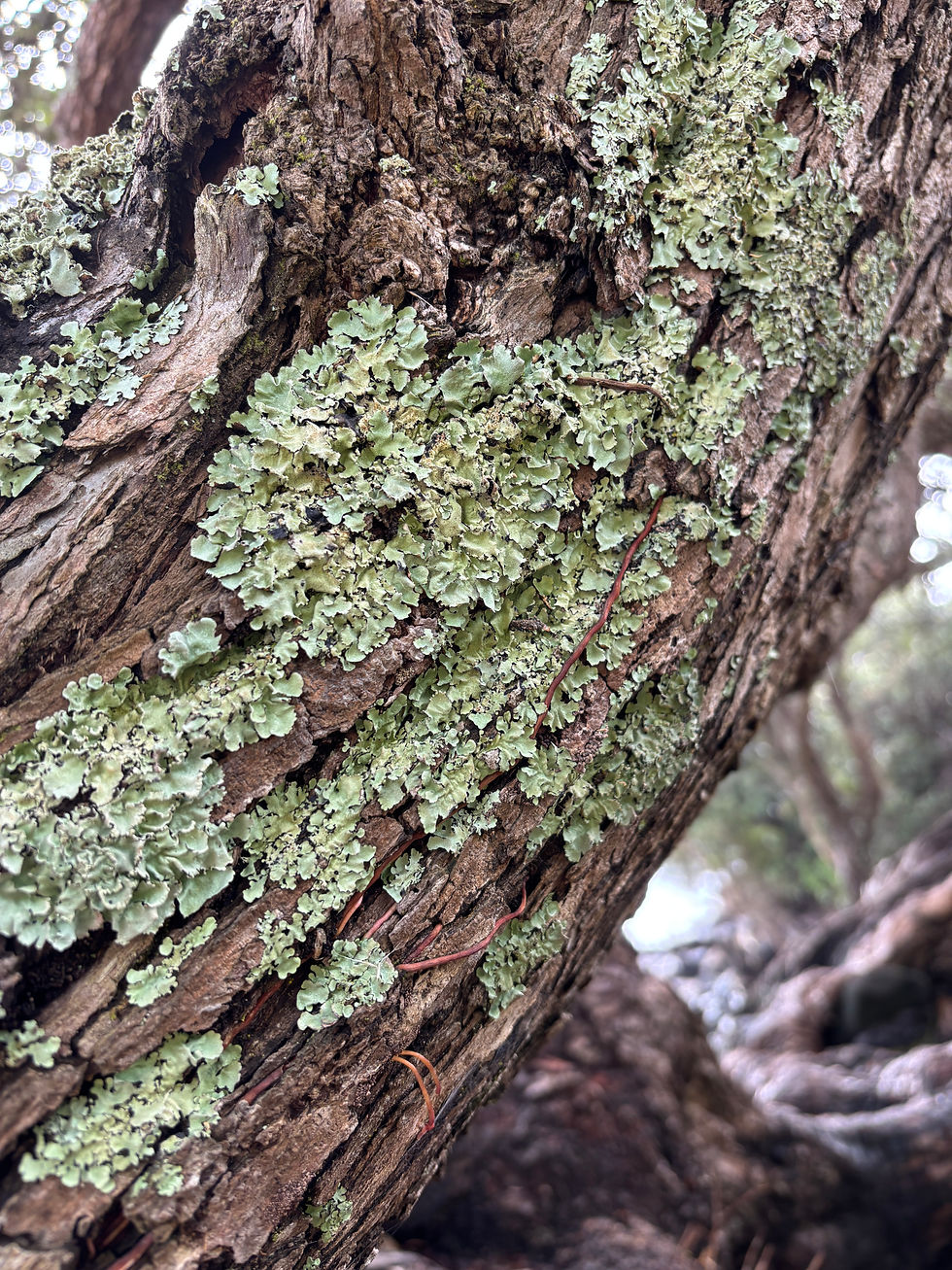
The ability to survive periods of extreme desiccation by going into a state of metabolic suspension (cryptobiosis) makes them extremely resilient. Lichens have even survived exposure to outer space!
They are able to manufacture protective chemicals; over 1000 are known, some of them potentially useful to humans. Though lichens are consumed by many different cultures across the world, it is important to know that certain lichens are poisonous and many contain mildly toxic secondary compounds.
Some animals, such as reindeer living in the Arctic Circle, may eat lichens; while the larvae of many Lepidoptera species feed only on lichens. It is also utilised as a nesting material by northern flying squirrels.

Historically, humans have utilised lichen pigments to create dyes, with reports dating back nearly 2,000 years. The well-known pH indicator test (litmus) uses a dye extracted from the lichen Roceella tinctoria. .
With their very slow growth rate of less than a millimetre per year, they are considered to be among the oldest living organisms. One specimen of Rhizocarpon geographicum on East Baffin Island has an estimated age of 9,500 years.
Lichenometry, a geochronological dating technique where a crustose species of evenly slow-growing lichens like Rhizocarpon geographicum are used to estimate the age of exposure of rock surfaces is sometimes used for dating events in the past 1,000 to 10,000 years.
It's fair to say that there is still a lot to be discovered about lichens, and that fact is very exciting!


