
About a Giant: Dawsonia superba and the Mighty Moss Piglet

Dawsonia superba, aka the Giant Moss, is the tallest self-supporting moss in the world, and it's found right here in Aotearoa, New Zealand. Reaching a height of up to 60cm, you would be forgiven for mistaking it for pine seedlings - the resemblance is uncanny!
It thrives in moist, shaded environments, on clay banks, at the base of trees and along forest paths.

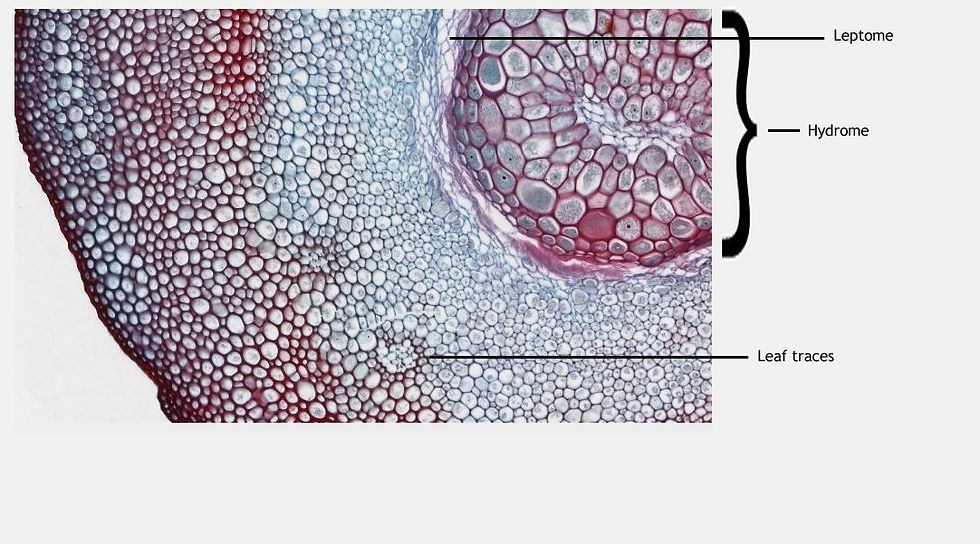
This moss, from the Polytrichaceae family, has developed an extraordinary adaptation to reach a towering height in the miniature world of mosses - it has evolved a pseudo-vascular structure to facilitate growth that resembles that of higher vascular plants.
Reproduction is both sexual and asexual. In the first instance, the gametophytes are dioicious, having separate male and female plants that often grow very close to each other. The male reproductive structure produces sperm that must reach a female plant in order for fertilization to occur. Additionally, rhizomes often send up vegetative shoots.

Moses evolved from ancient green algae over 450 million years ago and became the early land colonisers. Experts at adaptation and survival.
Desiccation tolerance is one of their traits; they are able to enter a state of suspended animation when conditions are dry, only to revive when water becomes available.
Mosses do not have roots, but rhizoids (many-celled filaments) often branched hair-like structures which they use to attach themselves to the substrate and to draw water (capillary action). Crucially, water and nutrients are also absorbed directly through their leaves that lack a waxy cuticle. This allows them to grow in very unique places, for example, straight on the bare rock.


Often the first plant to appear on disturbed sites, they stabilise the soil surface and help to keep climatic conditions stable, allowing new plants to grow.

Mosses create unique microhabitats that support a diverse range of life. Aside from other members of the flora family, there are the representatives of fauna too. The "Moss Dwellers" - from microscopic invertebrates, invertebrates, amphibians, reptiles, birds, and mammals through to microbes.
One remarkable member of the microscopic invertebrates group is the Moss Piglet (Tardigrada - meaning 'slow walkers'). These eight-legged creatures share one extraordinary trait with mosses, that of being nearly indestructible!

Sometimes referred to as 'Water Bears', they move with a distinctive lumbering gait. They feed on plant cells, algae, and small invertebrates, using their stylets to pierce food sources.
When water is not available , tardigrades are capable of suspending their metabolism, entering a state of cryptobiosis. They draw their legs and head in, forming a desiccated cyst. In this state of 'tun', where no metabolic activity takes place, they can exist without food or water for several years, even decades while at the same time being highly resistant to environmental stresses. These include extreme temperatures from -272°C to +149°C, pressure, lack of oxygen, ionising radiation, and the vacuum of space! No wonder they made it into sci-fi movies.
From breeding habitat, nesting material, moisture and food source to nitrogen fixation and carbon storage - mosses are indispensable superheroes of the plant kingdom!


