
Cosmopolitan Globetrotter - forever for ever, ake ake
- Heda Landscape Design Ltd.

- Sep 6, 2025
- 2 min read
Updated: Sep 18, 2025

Notable for its extremely wide distribution over all the continents except Antarctica, by means of oceanic dispersal, Dodonea exhibits a remarkable adaptability, versatility, and resilience.
This attractive, fast-growing shrub or small tree found in coastal to lowland forests, occupies a range of habitats from dune-fields and boulder beaches through to coastal scrub. It prefers sheltered position in full sun with well-drained, moist soil.
Growing to about 3m tall (although in favorable conditions this could be more), its resistance to salinity, drought, and pollution and tollerance of strong winds places this species as the top contestant for multiple uses in a garden situation. Whether as a decorative solo specimen showcasing its fabulous form, a windbreak, or utilised as an attractive hedge. Its leaves display a translucent quality in the sun and when planting to backlight the tree will create a mottled, dappled shadow. Dodonaea viscosa brings subtle beauty and elegance to a garden space.
With its red to dark orange, stringy and flaky bark, it invites us to showcase this quality by lifting the crown and thus exposing the trunk, providing space for lower-growing companion planting at the same time.
Flowering occurs through spring to mid-summer. Male and female flowers usually appear on separate plants; pollen is transported by anemophily (distributed by wind). The fruit that follows is a capsule with two to four wings and is sometimes mistaken for the flowers.


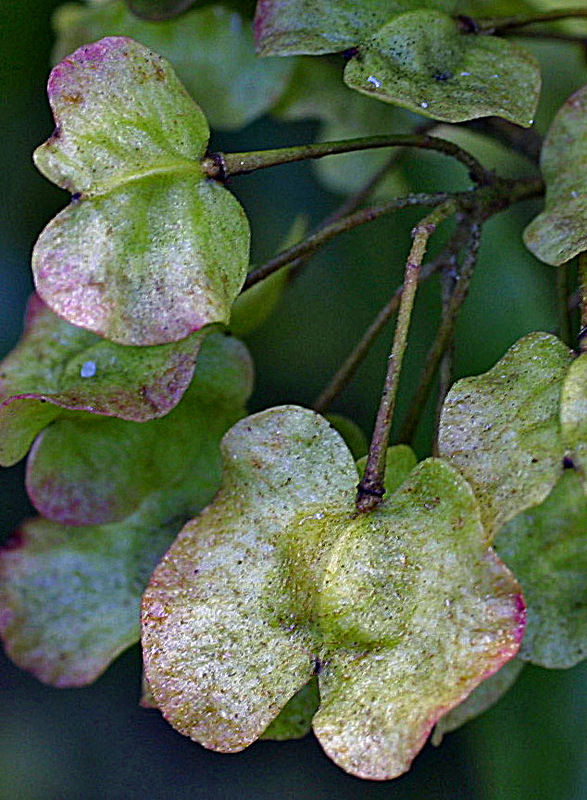
Dodonaea viscosa is named after the Flemish physician and botanist Rembert Dodoens ( 1517 - 1585 ); viscosa- meaning sticky ( young growth and buds are sticky ). In New Zealand, we also refer to this indigenous species as 'ake ake' in the Māori language, which can be translated as 'for ever for ever'.
It is the heaviest of New Zealand native woods and was utilised by the Māori people for making taiaha, patu, and other weapons as well as gardening tools. Medicinal uses have also been recorded.
Its ecological services extend to providing food and shelter for a diverse range of native birds, lizzards and insects, making ake ake a valuable addition to any garden.
Source:
New Zealand Plant conservation Network 2025. Retrieved from http://www.nzpcn.org.nz
Maanaki Whenua Landcare Research 2025. Retrieved from http://landcareresearch.co.nz
University of Auckland. Retrieved from http://www.nzplants.auckland.ac.nz
Wikipedia http://www.wikipedia.com


